In a sudden cardiac emergency, every second matters. Whether you are at a park, workplace, gym, or public venue in Denver, knowing how to respond can make a life-saving difference. Having CPR Certification and understanding how to locate and use an automated external defibrillator, or AED, gives you the ability to act immediately while waiting for emergency responders.
AEDs are designed for everyday people. You do not need to be a medical professional to use one. These devices are placed throughout Denver in accessible locations so that bystanders can step in and help when it matters most.
What Is an AED and How Does It Work
An automated external defibrillator is a portable device that checks a person’s heart rhythm and delivers a shock if needed to restore a normal heartbeat.
When someone experiences sudden cardiac arrest, the heart’s electrical system malfunctions. The AED analyzes the rhythm and determines whether a shock is required.
The device:
- Provides step-by-step voice instructions
- Only delivers a shock when appropriate
- Guides you through the entire process
- Works alongside CPR to improve outcomes
AEDs are built to be simple, safe, and effective.
- Works alongside CPR to improve outcomes
Why AED Access Is Critical in Denver
Denver is an active city with busy public spaces, outdoor recreation areas, and large gatherings. Emergencies can happen anywhere, from hiking trails to office buildings.
Emergency responders work quickly, but delays can still occur due to:
- Traffic and distance
- Outdoor or remote locations
- Large crowds
- Building access challenges
Having AEDs available in public spaces ensures that help is available immediately, even before responders arrive.
- Building access challenges
Common Places to Find AEDs in Denver
AEDs are placed in areas where people gather and where emergencies are more likely to occur.
You can often find AEDs in:
- Office buildings and lobbies
- Gyms and fitness centers
- Airports and transportation hubs
- Schools and universities
- Shopping centers
- Hotels and event venues
- Parks and recreational facilities
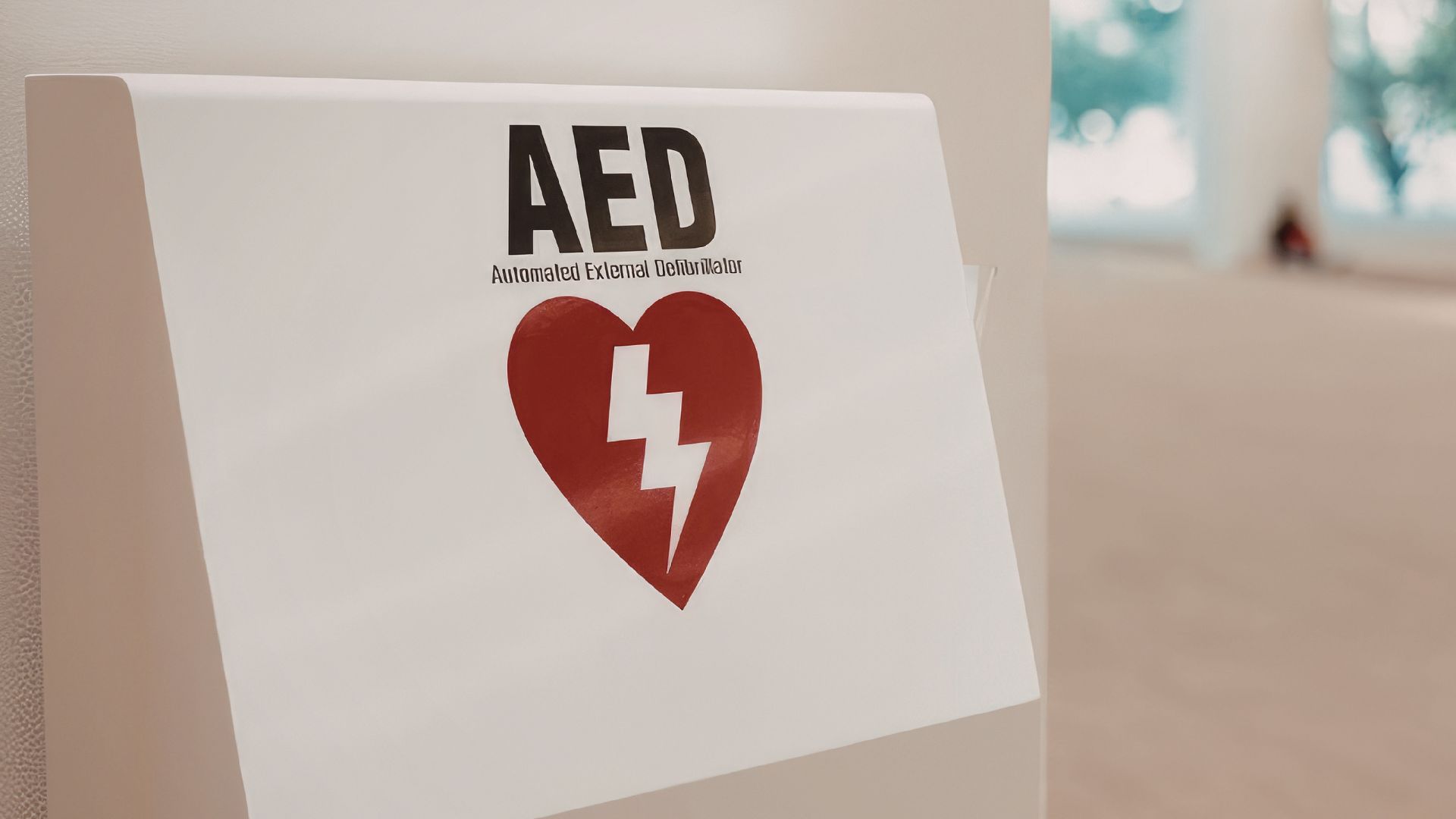
Look for clearly marked cabinets or signage indicating the location of an AED.
- Parks and recreational facilities
How to Quickly Locate an AED During an Emergency
In an emergency, time is critical. Knowing how to find an AED quickly can save valuable seconds.
To locate an AED:
- Check nearby walls or common areas
- Look for signage with a heart and lightning bolt symbol
- Ask staff or bystanders for assistance
- Send someone else to retrieve the device while you begin CPR
Being aware of AED locations in places you frequent can help you respond faster.
- Send someone else to retrieve the device while you begin CPR
Step-by-Step Guide to Using an AED
AEDs are designed to guide you through each step, making them accessible even for first-time users.
Here is a general overview:
- Turn on the AED
- Follow the voice instructions
- Expose the person’s chest and attach the pads
- Allow the device to analyze the heart rhythm
- Deliver a shock if instructed
- Resume CPR immediately after the shock
The AED will continue to provide guidance throughout the process.
The Role of CPR When Using an AED
CPR and AED use work together to improve survival chances. While the AED can restore a normal heart rhythm, CPR maintains blood flow to vital organs.
If you are trained, you should:
- Begin chest compressions immediately
- Continue CPR while the AED is being prepared
- Follow the device’s instructions
- Resume CPR after each analysis or shock
Having CPR Certification ensures that you can perform these steps effectively.
- Resume CPR after each analysis or shock
Overcoming Fear and Taking Action
Many people hesitate to use an AED because they are unsure of what to do. It is important to remember that AEDs are designed to help guide you.
The device will:
- Provide clear instructions
- Analyze the situation for you
- Prevent inappropriate shocks
Taking action is always better than waiting. Immediate response can make a life-saving difference.
- Prevent inappropriate shocks
Understanding Good Samaritan Protection
Colorado has Good Samaritan laws that protect individuals who provide emergency assistance in good faith.
These laws are intended to:
- Encourage bystanders to act
- Reduce fear of legal consequences
- Support community response efforts
As long as you act responsibly and in good faith, you are generally protected when using an AED.
- Support community response efforts
Why Hands-On Training Makes a Difference
While AEDs are designed for public use, training provides a deeper level of confidence and skill.
CPR and AED training help individuals:
- Recognize cardiac emergencies
- Use equipment correctly
- Respond quickly and confidently
- Work effectively with others
Hands-on practice is especially valuable for building muscle memory.
- Work effectively with others
How to Get CPR and AED Certified in Denver
Getting certified is a straightforward process.
- Choose a CPR and AED training program
- Select a class that fits your schedule
- Attend the training session
- Complete hands-on practice
- Receive certification upon completion
Many training providers in Denver offer flexible scheduling options.
CPR Certification Cost in Denver
The cost of training can vary depending on the program and provider. Most courses are affordable and provide significant value.
For individuals, this is an investment in safety and preparedness.
Why Ongoing Training Is Important
CPR certification typically lasts for two years. Renewal ensures that skills remain current and effective.
Ongoing training helps:
- Maintain confidence
- Improve technique
- Stay aligned with guidelines
- Provide consistent care
For Denver residents, staying up to date is essential.
- Provide consistent care
The Importance of Community Awareness
AEDs are only effective if people know they exist and understand how to use them. Increasing awareness helps ensure that more individuals are prepared to respond.
Community awareness leads to:
- Faster response times
- Increased survival rates
- Greater confidence in emergencies
- Stronger support networks
In Denver, this awareness is an important part of public safety.
- Stronger support networks
Real-Life Impact of AED Use
AEDs have saved countless lives in real-world situations. In many cases, it is a bystander who steps in and uses the device before responders arrive.
These moments highlight the importance of being prepared and willing to act.
Final Thoughts About AED Use in Denver
In a cardiac emergency, immediate action is critical. Knowing where to find an AED and how to use it can make a life-saving difference.
Getting CPR Certification ensures that you are prepared to respond with confidence and skill.
For Denver residents, being ready to act in an emergency is one of the most valuable things you can do.
CPR Certification FAQs
What is an AED?
An AED is a device that analyzes heart rhythm and delivers a shock if needed to restore a normal heartbeat.
Can anyone use an AED?
Yes, AEDs are designed for public use and provide step-by-step instructions.
Do I need CPR certification to use an AED?
No, but having CPR certification improves your ability to respond effectively.
How long does CPR certification last?
CPR certification typically lasts for two years before renewal is required.
Where are AEDs located in Denver?
AEDs are commonly found in public spaces such as offices, gyms, schools, and transportation hubs.